About the Department
OVERVIEW
In 1988, the Board of NDA approved the establishment of the Faculty of Engineering made up of Department of Mechanical Engineering and the Department of Electrical/Electronics Engineering. Sequel to this approval, the Commandant of NDA visited the Nigerian Air Force Technical Training Group (NAF TTG) and toured their Laboratories and Workshops. It was found that the workshop facilities and to some extent the Laboratories in NAF TTG were suitable for the proposed engineering programme of the Academy. Consequently, the Commandant directed that arrangements be made to start the teaching of engineering Courses in NDA in September, 1989.
The Department of Mechanical Engineering eventually commenced activities in September 1989 with an initial strength of 4 Academic staff and 3 non-academic staff. The training in the department was designed to last for 5 years and provide Officer Cadets with knowledge and understanding of the scientific basis of engineering and the use of such knowledge for the benefit of the Nigerian Armed Forces. Furthermore, the training is aimed at giving the Cadets attributes that are essential for a progressive and continuous development of a career of exemplary service to the nation. The courses in the Department lead to the award of degree of Bachelor of Engineering in Mechanical Engineering.
The Department graduated it first B.Eng Bachelor of Engineering Degree Cadets at the end of the 1992/93 academic session. Over the years, all the required Laboratories and Workshop have been built and equipped to support academic programmes in the Department.
The original academic curriculum of the Department was accredited by the National Universities Commission in 1999.
Based on the report of the Committee set up in 2001 to review the curricula of the Faculty of Engineering as directed by the Governing Council of NDA, a modified curriculum to redirect the training of cadets of the department to be in line with the engineering exigencies of the Nigerian Military was approved and became operational by the 2002/2003 academic session.
PROGRAMME/SUB-DISCIPLINE/DISCIPLINE PHILOSOPHY AND OBJECTIVE
The general philosophy of the programme is to produce graduate military officers with a high academic standard and adequate background and of immediate value to the needs of the Military in particular, technology Industry and the Nation in general. In order to achieve this philosophy, the Department programme is designed to train Mechanical Engineering graduate officer engineers capable of solving local problems and applying themselves effectively to the needs of the various sections of the Armed Forces of Nigeria. In fulfillment of the above, specific features have been incorporated into the programme. These include others:
- 1. Common Foundation years at 100 and 200 levels for all Cadets
- 2. Workshop practices, laboratory works and industrial visits.
- 3. Project in the final year on which the cadets work independently under supervision
- 4.Special skills and in-depth study in a particular area of the program through optional courses as electives.
- 5. Adequate knowledge in the areas of Engineering Management, Economics and law.
- 6. Adequate knowledge in the Science and Technology of Military Engineering
- 7. Adequate knowledge of social sciences issues relevant to the Military in their interaction with the environment and with people in war and peace periods.
OBJECTIVES
The Department, which commenced activities in September 1989, has the following objectives:
- 1. To provide Officer Cadet with knowledge and understanding of the scientific basis of Engineering and use of the knowledge for the benefit of the Nigerian Armed Forces.
- 2. To provide Cadets the necessary attributes that are essential for progressive and continuous development of a career of exemplary service to the nation.
3. The course in the Department leads to the award of a degree of Bachelor of Engineering in Mechanical Engineering.
ADMISSION REQUIREMENTS
Admission into the Nigerian Defence Academy is highly competitive. Considering the military training coupled with the academic demands vis-avis the philosophy and objective of the NDA, it becomes imperative for any prospective candidate to be completely above average, to be able to cope with the high standard required in the Academy. It must be borne in mind that, the NDA, being a degree awarding institution, must meet the necessary academic standards acceptable to the National University Commission (NUC). Basic Minimum Requirements are thus as follows:
(i) He/she must normally be a Nigerian citizen.
(ii) His/her age must fall within 16-17 years.
(iii) He/she must be physically, mentally and medically fit.
(iv) He/she must possess any of the following educational qualification WASC/GCE, or NECO at OLevel or equivalent with at least 5 credits in appropriate subjects obtained in not more than 2 sittings. Three (3) of these must be Mathematics, Physics and Chemistry. Credit in English Language is compulsory with another science subject. A credit in Further Mathematics is an added Advantage.
(v) Having obtained the above mentioned qualifications the candidate must obtain and properly fill the Unified Tertiary Matriculation Examination Form (UTME), through the Joint Admission and Matriculation Board (JAMB), for entrance examination into Nigerian Defence Academy, with NDA as First Choice.
(vi) Having obtained the required cut-off (or minimum required) points, for Mechanical Engineering Program, in the UTME. Thereafter, candidate must obtain and properly fill the NDA application form for the entrance examination. Candidates are required to sit and pass the entrance examination conducted by the Academy. The Academic Branch of NDA is responsible for the setting and marking of the Entrance Examination. Candidates are required to answer questions from the General English paper, and three other subjects of their choice of discipline. At the end of the examination, successful candidates are short listed for the Armed Forces Selection Board interview on quota basis.
(viii)The final selection of candidates is based on merit and quota system according to the needs of the three services of the Armed Forces.
(vii) During Armed Forces Selection Board (AFSB), interview, which usually last two to three weeks, successful candidates are made to undergo the following:
-
- Medical Training
- Physical Training
- Written Aptitude Test
- Planning exercise
- Oral interview
-
The B.Eng Programme in Mechanical Engineering is designed for five (5) years comprising both classroom work and industrial work experience training as follows:
- 1. 100 level-400 level – Lecture room work, laboratory work and Workshop training.
2. 500 level – CIWES (Cadets Industrial Training Experience)
Programmes Offered
B. Eng Mechanical Engineering (for Officer Cadets)
- PhD Mechanical Engineering (Thermofluid and Energy)
- PhD Mechanical Engineering (Production)
- M.Eng. Mechanical Engineering (Production)
- M.Eng. Mechanical Engineering (Thermofluids & Energy)
- MPhil Mechanical Engineering (Production)
- MPhil Mechanical Engineering (Thermofluid and Energy)
- Postgraduate Diploma in Mechanical Engineering (PGDME)
- Master in Production Management (MPM)
- Master in Renewable Energy Management and Auditing
Department Staff
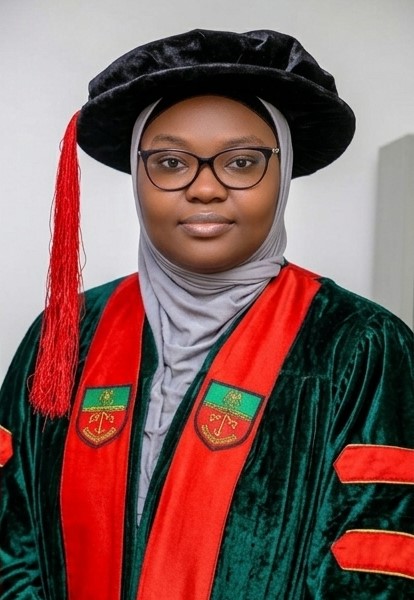

Engr Prof Danladi King Garba
Professor
Production Engineering / Mechanical Systems Design
View Profile

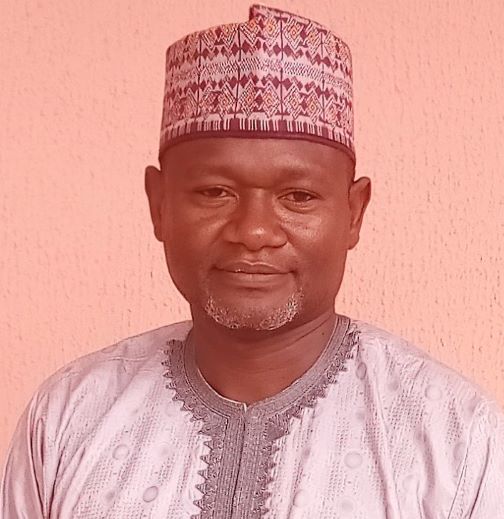
Engr Prof Sani Umar Mohammed
Professor
Solar modelling, Bio energy, design and development in renewable energy technologies.
View Profile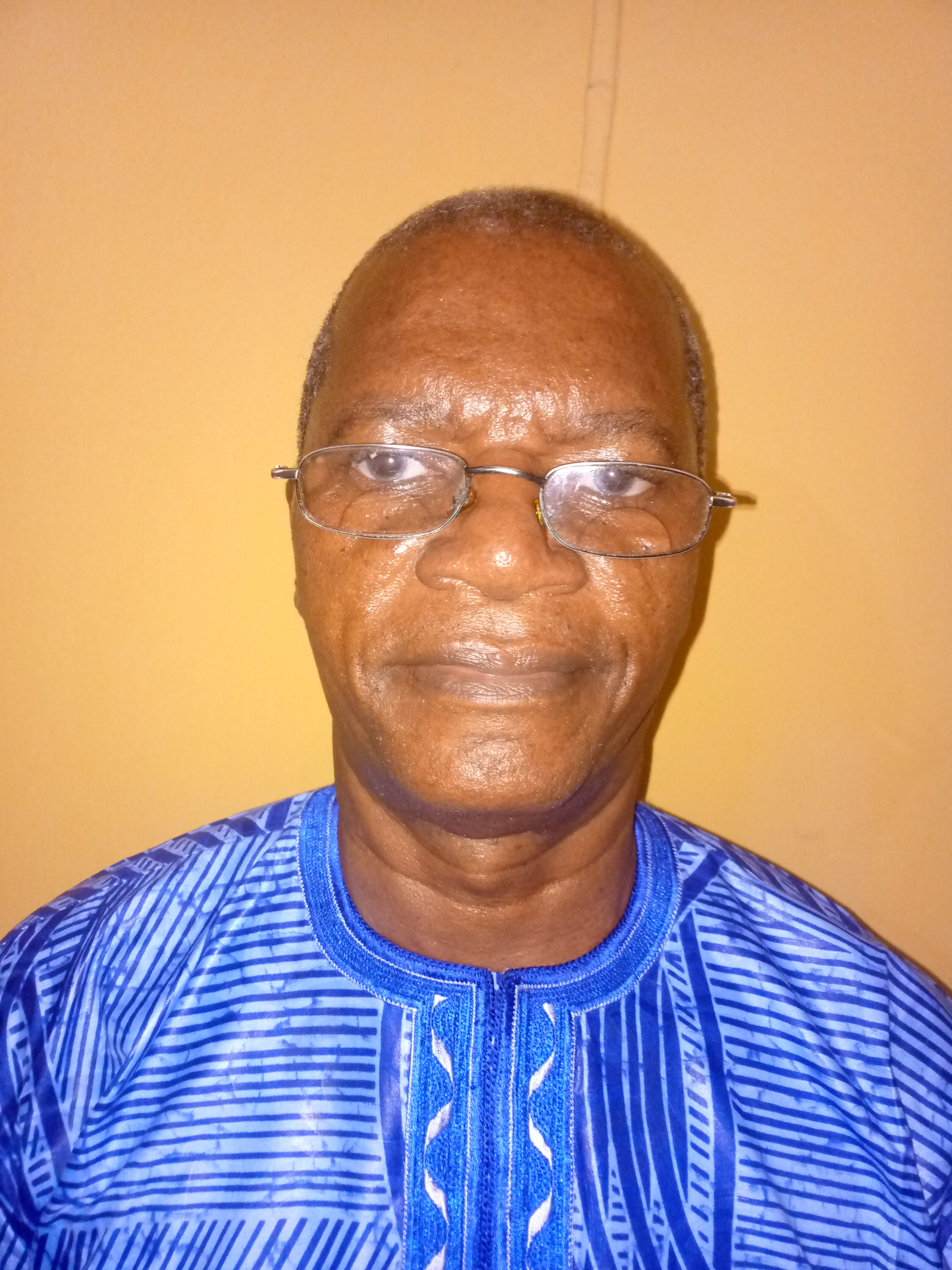

Engr Dr Yakubu Shuaibu Ochetengwu
Associate Professor
Production Engineering, Cutting Fluids, Machining, and Material Development
View Profile






Facilities
- Heavy Machinery and CNC Production Workshop: Traditional lathe facilities and CNC (Computer Numerical Control) machine tools configured for high-precision component fabrication, cutting-fluid application research, and metallurgy testing.
- Thermofluids and Internal Combustion Lab: Instrumentation and diagnostic platforms used to model fluid dynamics, evaluate internal combustion engine parameters, and analyze heat-transfer efficiency.
- Materials and Precision Testing Suite: Special testing setups utilized for the evaluation of structural surface wear, optimization of surface finishes in steel machining, and measuring structural loads.
- Applied Automation and Mechatronic Prototyping Labs: Multi-disciplinary workspaces where mechanical researchers develop physical hardware systems, including sensor-driven surveillance fixtures and indoor firefighting robots.
Research Focus Areas
1. Production Engineering and Optimization of Machining Parameters
- Surface Integrity and Finish Tuning: Investigative research using Taguchi optimization and varying depths of cut to identify ideal cutting parameters during the turning of carbon or mild steel using high-speed steel cutting tools.
- Gearing and Component Manufacturing: Detailed 3D modeling, geometric analysis, and virtual testing of complex mechanical transmission components—such as complex bevel gears—using specialized engineering suites like SolidWorks.
- Industrial Bearings and Applications: Historical and technical reviews of engineering bearings to improve structural durability and efficiency in high-stress operational setups.
2. Thermofluids, Energy Systems, and Environmental Infrastructure
- Renewable Energy and Smart Storage: Advanced modeling of alternative energy options, solar photovoltaic maximum power points based on varying geographical coordinates, and battery backup longevity optimization.
- Alternative Applications for Surveillance Support: Structural and mechanical design of hybrid civil-military outdoor frames—such as artificial palm tree structures—optimized to structurally hold surveillance cameras and street lighting.
3. Advanced Materials Science and Mitigation of Corrosion
- Mitigating Infrastructure Deterioration: Developing and testing specialized metallic, corrosion-resistant paints explicitly tailored to safeguard petroleum product pipelines across regional supply grids.
- Weaponry Component Material Diagnostics: Rigorous reporting and experimental modeling of the degradation, chemical corrosion, and operational wear patterns occurring over time inside firearm barrels.
4. Mechatronic Control and Sensor Integration
- Robust Reactor Control Paradigms: Formulating adaptive fractional-order sliding mode controllers (AFSMC) and robust control loops for chemical and free-radical polymerization installations.
- Environmental Emergency Robotics: Designing localized automated hardware architectures, such as indoor firefighting rovers designed to locate and extinguish small-scale thermal hazards autonomously.
Key Achievements
- Decades of Military-Technical Graduates: Since commencing activities in 1989, the department has successfully graduated decades of high-caliber Officer Cadets holding standard Bachelor of Engineering (B.Eng.) degrees, supplying technically skilled personnel directly into the Nigerian Armed Forces.
- Expanding Specialized Postgraduate Infrastructure: The department has successfully established a robust postgraduate pipeline through the NDA Postgraduate School, offering accredited career-advancing tracks, including Post Graduate Diplomas (PGDME), Professional Masters, and high-impact academic research degrees (M.Eng, MPhil, and PhD).
- Pioneering Research Leadership: Faculty within the department have attained full professor status and dean positions within the Faculty of Engineering and Technology (FET), steering national research benchmarks in production and industrial systems.
- Contributions to Defense and Industrial Sectors: Faculty members continuously publish high-impact studies designed to safeguard and improve national infrastructure, including research into anti-corrosive pipeline finishes for petroleum products and investigations into structural defects and wear in firearm barrels.
- Industrial Exposure Systems: The department sustains active external partnerships through programs like the Cadets Industrial Work Experience Scheme (CIWES), sending training cohorts to national institutes (such as the Nigerian Institute of Transport Technology - NITT) to acquire real-world field experience
Department Info
- Academic Staff
- 14
Parent Faculty