About the Department
OVERVIEW
The Department of Defence and Security Studies (DSS) is built on a niche that blends “Defence Studies” and “Security Studies”. Our staff and students are committed to studying, researching and understanding the foundations of political and defence institutions, structures, processes and actors.
The Department does not deviate from its core foundation in Political Science, but adopts interdisciplinary methodology which borrows from a wide range of disciplines in the Social Science and Humanities. A sound knowledge of Politics is essential to understanding and appreciating how societies are organised, as well as the relationship between leadership and citizenship. It is also vital in understanding the architecture and dynamics of nation-states, governmental and intergovernmental institutions, non-governmental organisations and corporate entities. A study of Politics is not only about the behaviour and choices of states and governing elites; it is also about the role and functions of non-state actors: citizens, NGOs and corporate organisations. Political Science focuses on political theory; comparative politics; political economy; political behaviour, international relations, regional/area studies, organisational studies, citizenship studies, peace and conflict studies among others.
On the other hand, Defence and Security Studies is the study of how nation-states manage the means of coercion at their disposal to pursue their national and allied interests. Defence Studies is concerned with the study of military institution-building, war and warfare, defence policy, national and international security, military strategy in war and peacetime, alliances and alliance-building, and conflict management (especially peacekeeping, peace-building, and peace-making), among others. The key elements of Defence Studies are security studies (national/international security, human security, security administration, etc.), defence studies, and strategic studies.
Therefore, a sound knowledge of Defence and Security Studies is useful in understanding the micro- and macro-dynamics of war and peace, as well as the imperatives of national/international security and strategy. It is essential in building a pool of experts with a sound knowledge and skills of defence administration, policy formulations and implementation, national security and strategic thinking.
“…Defence Studies is the study of how nation-states manage the means of coercion at their disposal to pursue their national and allied interests…the study of military institution-building, war and warfare, defence policy, national and international security, military strategy in war and peacetime, alliances and alliance-building, and conflict management…”
The products of Defence and Security Studies will be sufficiently equipped to answer both national and international calls. Our students are given sound exposure to theoretical and empirical issues, as well as the imperative of leadership and character development. Our students will be qualified as graduates with a sound knowledge of local and global issues, and creative skills of managing scarce human and material resources. The Department seeks to fulfil NDA’s core mission of “providing each student with the knowledge, capacity, skills and values in the field of defence and security.
PHILOSOPHY
A systematic study of Defence and Security provides: A firm foundation for all-round knowledge of national and global structures and institutions; enhances one’s understanding of social and political problems at various levels of society; stimulates the creative capacities for problem-solving and creative imagination; offers a solid basis for independent and critical thinking; and creates the imperatives for character development and leadership/citizenship training
- 1. To develop students’ understanding of the concepts and issues that underpin the key sub-disciplines of Defence and Strategic Studies, including, but not limited to, International Relations, Comparative Politics, Defence/Security/Strategic Studies, Political Theory, Political Economy, Development Studies, Peace and Conflict Studies, Research Methodology, and Science, Technology and Defence
2. To stimulate students’ grasp of theoretical and practical issues in Defence and Security Studies
3. To develop students’ understanding of social and political problems at various levels of society – national, regional and global.
4. To enhance students’ capacities in critical thinking, leadership and balanced and evidence-based analysis of defence issues
5. To equip and enhance students’ skills and capacities in solving problems by developing creative solutions to social and political problems in both global and local contexts.
DEPARTMENTAL STRUCTURE
The Department is headed by the Head of Department (HOD), who oversees the routine management of the Department. He/she is the line manager for all academic and non-academic staff within the Department. He/she ensures teaching quality, staff/student discipline and punctuality, smooth conduct of examination and other academic functions, and represents the Department at the Academy level functions. He/she also leads curriculum development and reviews at the undergraduate and postgraduate levels. The HOD delegates some functions to members of academic staff: registration, coordination of programmes, examination, research and publications, seminars, etc. Members of the academic staff are members of the Departmental Board, and discharge individual duties such as teaching, conducting examinations, registration, and counselling.
Academic staff in the department are assigned responsibilities by the Head of Department each Academic Session, and on ad hoc basis. These responsibilities cover those of the Department, Faculty and the Academy. In the department, decisions are made and implemented by the Departmental Board. Some of the responsibilities include the following: Examination, Curriculum, Welfare, Mentoring and Students matters. Additional responsibilities are given as the need arises.
ORGANIZATIONAL STRUCTURE OF DSS

Programme Directors are members of academic staff appointed by the HOD to coordinate specific academic programmes, at undergraduate and postgraduate levels. There are Committees responsible for specific functions such as Curriculum, Publications, Mentorship and Examination. Both the Programme Directors and Committees report to the HOD and/or Departmental Board.
The Departmental Secretariat is manned by full time non-academic staff who carry out routine clerical and secretariat functions, including the processing and filing of correspondence, minute-taking in Departmental meetings, processing of examination question papers and results, processing and distribution of time-table and general secretariat duties.
OBJECTIVES OF PROGRAMMES
1. This programme has been drawn to meet the requirements of the NUC’s approved Minimum Academic Standards and the National Policy on Education. It has also been designed to:
a. Provide training in the principles of defence and security studies and their application to the type of degree programme concerned – defence, security, conflict resolution and peace studies.
b. Inspire the students intellectually through the programme in such a way that they appreciate the various facets of defence and security problems.
c. Deliver a solid foundation of knowledge about the working of national defence and security and its institutions and develop the competences for the positive use of such knowledge.
d. Develop in students the capacity to apply the knowledge to the resolution of societal problems and conflicts.
e. Develop in students the skills and competence that would allow them to be self-reliant and dynamic players in the scheme of things.
f. Provide the students with necessary skills for studying and defence and security matters.
g. Provide the students with the skill-base from which they can proceed to higher studies in defence, peace and security studies.
h. Imbue the students with a deep appreciation of the dynamics of national defence and security and the effect of this on wider socio-economic development and societal well-being.
ADMISSION REQUIREMENT AND EXPECTED DURATION OF THE COURSE
The entry requirements in Defence and Security Studies are (1) an acceptable minimum score in JAMB and (b) at least a minimum of five credit passes in not more than two sittings, at the SSCE or its equivalent, which must include Mathematics, English Language, Government or History. The minimum duration of the course is four years
Programmes Offered
1. Bachelor of Science (B.Sc.)
Defence and Security Studies
This is a four-year programme fully accredited by the National Universities Commission (NUC). The programme conforms with the NUC Benchmark and Core Curriculum and Minimum Academic Standards (CCMAS) for Defence and Security Studies
• PhD Defence and Strategic Studies
• MSc Defence and Strategic Studies
• Master in Conflict Resolution and Peacebuilding (MCRPB)
• Master in Strategy and Security Administration (MASSA)
• Master in Defence Security and Strategic Studies (MDSSS)
• Master in International Security and Humanitarian Studies (MISHS)
• Postgraduate Diploma in Defence Security and Strategic Studies (PGDDSS)
• Postgraduate Diploma in Strategy and Security Administration (PGDSSA)
• Postgraduate Diploma in Conflict Resolution and Peace Building (PGDCRPB)
Department Staff
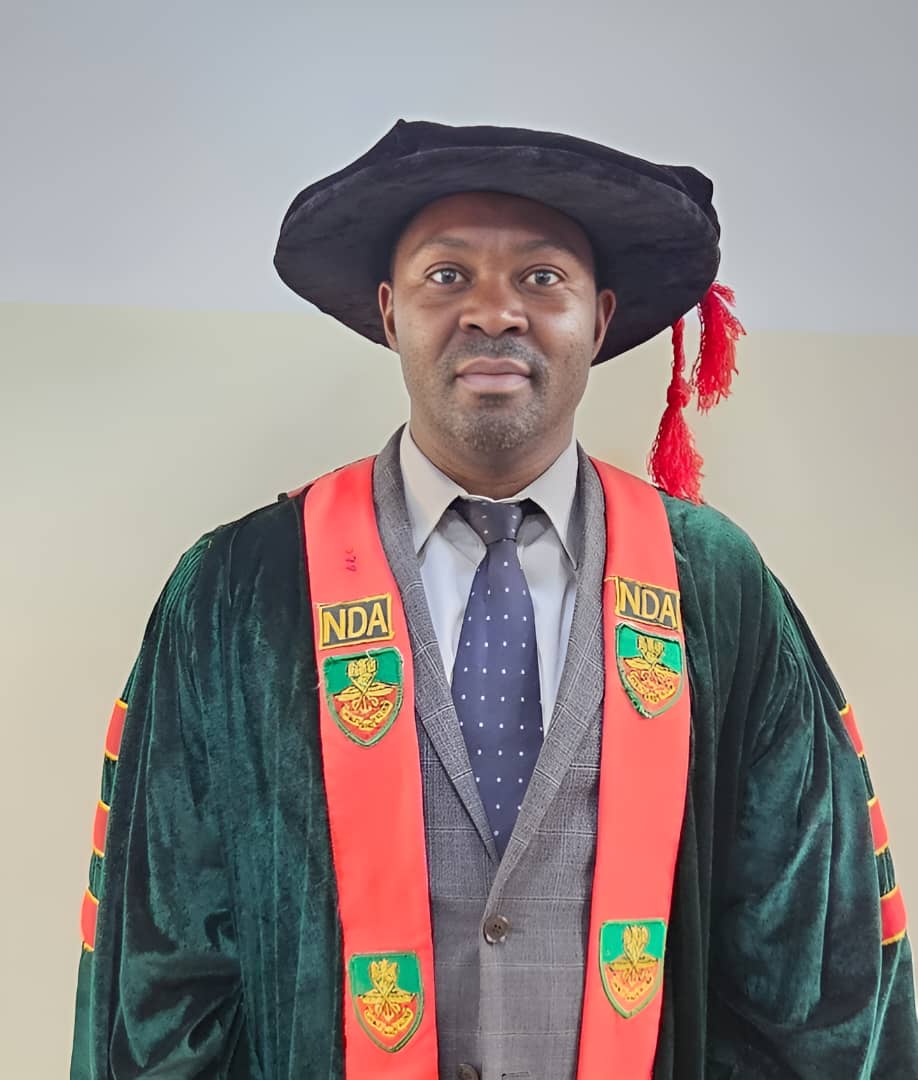

Dr Sunday Adejoh
Associate Professor
Defence and Security Studies, International Relations, and Development Studies.
View Profile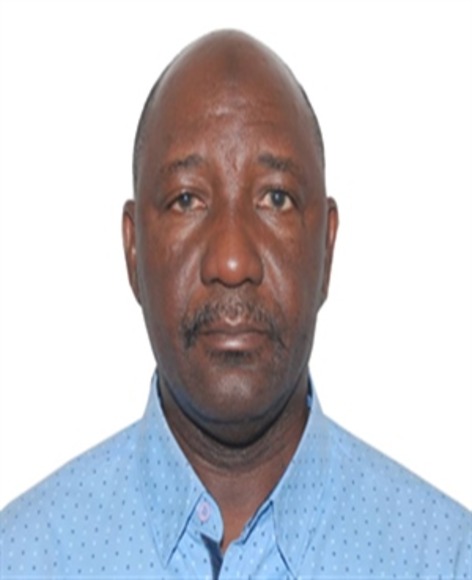

Dr Nufaisa Garba Ahmed
Lecturer I
Defence and Strategic Studies, Peace and Conflict Management.
View Profile

Dr Jibaniya Simon Awudu
Lecturer II
Defence and strategic studies, international relations, peace and conflict resolution, and national security.
View Profile
Mr Murshadi Bello Yahaya
Lecturer II
Defence and Strategic Studies, and Political Science.
View ProfileMr Man-of-God Ebiojo Ejima
Assistant Lecturer
Humanitarian Security and Defence Studies
View Profile


Research Focus Areas
1. Counter-Terrorism, Counter-Insurgency (COIN) & Asymmetric Warfare
Given the localized security challenges in the West African sub-region, this remains the heaviest area of empirical research.- Tactical Transitions: Investigating the shift from conventional military engagements to handling irregular threats, specifically focusing on the operational patterns of Boko Haram, ISWAP, and armed banditry networks in the Sahel.
- De-radicalization & Non-Kinetic Strategies: Extensive research into soft-power applications, psychological operations, counter-narrative management, and the rehabilitation of demobilized combatants.
2. Defense Administration, Strategy & National Security Policy
This pillar bridges high-level administrative governance with national security execution.- Strategic Security Administration: Analyzing procurement frameworks, defense resource allocation, and the organizational leadership structures within the Armed Forces of Nigeria (AFN).
- Inter-Agency Intelligence Integration: Researching the optimization of intelligence sharing and operational synergy between the military, paramilitary bodies (like the DSS and Nigeria Police Force), and civilian intelligence architectures.
3. Regional Interventions, Collective Security & Peacekeeping
Positioning Nigeria within its geopolitical context, this area focuses on cross-border stability.- ECOWAS & AU Frameworks: Evaluating the structural and operational efficacy of regional architectures like the ECOWAS Standby Force and the Multinational Joint Task Force (MNJTF) in the Lake Chad Basin.
- Border Security & Transnational Crime: Mapping the mechanics of illegal weapon proliferation, human trafficking, and cross-border banditry corridors.
4. Conflict Resolution, Peacebuilding & Inclusive Governance
Focusing on the socio-economic and political drivers that trigger conflict before it requires military intervention.- Resource Scarcity & Communal Conflicts: Deep-dive studies into the farmer-herder dynamic, climate security vulnerabilities in northern Nigeria, and youth vulnerability to radicalization driven by economic hardship.
- Civil-Military Cooperation (CIMIC): Developing frameworks to improve relations, build public trust, and manage community education in conflict-ravaged zones.
5. Emerging Security Domains & Technology Integration
Adapting to 21st-century warfare realities, this focus area investigates the intersection of technology and national survival.- Cybersecurity & Hybrid Threats: Researching digital governance, the weaponization of social media for disinformation, and protecting critical national infrastructure from cyber warfare.
- Telecommunications & Operational Security: Assessing the utility, vulnerabilities, and legislative requirements of high-tech communication tracking systems in real-time anti-banditry and counter-kidnapping operations.
Research Alignment: These areas directly align with the department’s core postgraduate offerings, serving as the empirical foundation for dissertations across the M.Sc., MPhil, and PhD tracks in Defence and Strategic Studies.
Key Achievements
1. Advanced Strategic Capacity Building
The department has successfully established itself as a premier breeding ground for elite strategic thinking by introducing highly specialized academic and professional postgraduate programs.- Specialized Curriculum: It pioneer and anchors advanced programs including the M.Sc., MPhil, and PhD in Defence and Strategic Studies, as well as highly sought-after professional tracks like the Master in Strategy and Security Administration (MASSA) and the Master in Defence, Security and Strategic Studies (MDSSS).
- Joint Military-Civilian Training: A major achievement is its unique capability to train both senior military officers (across the Army, Navy, and Air Force) and civilian policymakers in the same environment, cultivating crucial inter-agency collaboration before they encounter real-world crises.
2. Think-Tank Contributions to Counter-Insurgency & National Security
Operating in a region heavily impacted by asymmetric warfare, the department has acted as a vital academic laboratory for Nigeria's defense architecture.- Policy Guidance: Through faculty research and postgraduate theses, the department consistently provides empirical data and policy recommendations utilized by the Armed Forces of Nigeria (AFN) to shape counter-insurgency operations in the Northeast and counter-banditry efforts in the Northwest.
- Asymmetric Doctrine Development: The department's research outputs significantly contributed to the academic foundation that led to the NDA's establishment of the School of Asymmetric Warfare, directly addressing non-conventional security vulnerabilities.
3. Fostering Civil-Military Relations
Historically, military training institutions functioned in isolation. The DSS department has been a vanguard in breaking these barriers down.- By expanding its professional master's programs and postgraduate diplomas to civilian administrators, intelligence officers, and members of paramilitary agencies (like the DSS, Custom Service, and Nigeria Police Force), the department has significantly harmonized civil-military strategies and improved joint-operational efficiency.
4. Regional and International Intellectual Footprint
- ECOWAS Alignment: The department collaborates heavily with regional security frameworks. Its research frequently feeds into West African peacekeeping initiatives and the Economic Community of West African States (ECOWAS) regional security mechanisms.
- Prolific Research Output: Faculty members and doctoral candidates from the department frequently publish authoritative works on maritime security in the Gulf of Guinea, border control management, and the nexus between climate change and resource conflicts in the Sahel.
Head of Department
Prof Sharkdam Wapmuk
Department of Defence and Security Studies
View Full ProfileDepartment Info
- Academic Staff
- 11
Parent Faculty